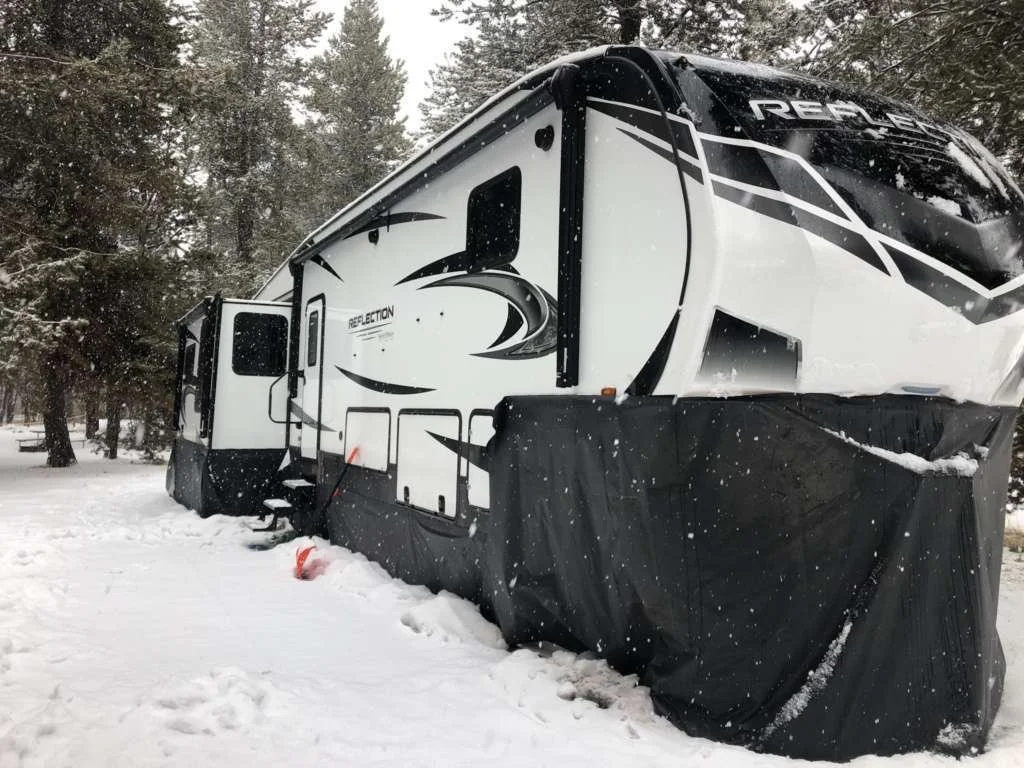
Winter Camping Information
Winter camping in Minnesota requires planning and preparation to ensure a safe and successful season.
On this page, you'll find an overview of our winter camping program, including information about winter preparation, skirting requirements, and what to do if your RV or water lines freeze. This information is intended to help prospective winter campers understand the expectations of staying with us during the winter months.
Once your application has been approved, you will receive our comprehensive Winter Camping Packet, which includes detailed policies, procedures, emergency protocols, utility information, and additional resources to help you prepare for the winter season.
We encourage all applicants to review the information on this page carefully before applying, as winter camping comes with unique challenges and requires a proactive approach to protecting your RV during Minnesota's cold weather.
Winterizing Your RV
Proper winterization is mandatory at Town & Country Campground to safeguard your RV and the campground’s infrastructure. Please follow all requirements below.
Insulation Boxes & Water Connections
Our winterized water hydrants are enclosed, wrapped with heat tape, and insulated with foam, but your diligence is still essential.
• The campground provides and installs a custom insulation box with a heat lamp at each campsite.
• Installation & rental fee: $75 one-time (includes box, lamp, and bulbs). When bulb needs to be replaced, please text Christine.
• Boxes will be installed once your skirting has been inspected and approved by campground management.
•Important: Skirting must meet minimum safety and insulation standards and be completed no later than October 20. Installation of our insulation box cannot proceed until your skirting passes inspection.
• The heat lamp must remain on at all times once activated, turning it off may cause freeze-ups and expensive damage.
• Check the box at least twice daily (morning and evening) to ensure the lamp is working.
• If you cannot check your box, notify the office immediately so arrangements can be made.
Sewer Lines
• Campers must provide their own heated water hose.
• It is highly recommended to fully insulate your sewer line.
• Use 4-inch PVC for durability and freeze protection.
Electric Heaters
• Electric space heaters are not recommended as primary heat sources.
• They consume high power and are costly to run.
• RVs with 30-amp service typically cannot handle their electrical draw.
• The campground has experienced electrical fires at pedestals due to misuse.
• You will be held responsible for any damage caused by electrical heaters.
Tip: A Bluetooth temperature sensor can be highly useful for monitoring the box remotely.
Procedures if Your RV Pipes Freeze
Freezing can happen quickly during extreme cold. Please follow these steps rightaway if you suspect your RV pipes have frozen:
Step 1: Notify the Office
Contact the office as soon as possible so staff can check if the issue is affectingmore than just your site.
Step 2: Thaw Safely
Use a safe heat source such as a hair dryer, small space heater, or heat gun on the low setting to gently warm the frozen area. Never use open flames (propane torch, kerosene heater, etc.) — these are dangerous and can cause fires. Check your insulation box light. If it is out, turn off your water immediately, (if the hydrant is already frozen, do not attempt to force it) and let the office know.
Step 3: Prevent Damage
Keep your RV’s water supply shut off until the freeze has thawed. Open cabinet doors near plumbing lines so warm air can circulate. Turn on your furnace to help heat underbelly spaces and plumbing areas.
Step 4: Call for Assistance if Needed
If the problem continues or you cannot restore water flow, contact
Skirting Your RV
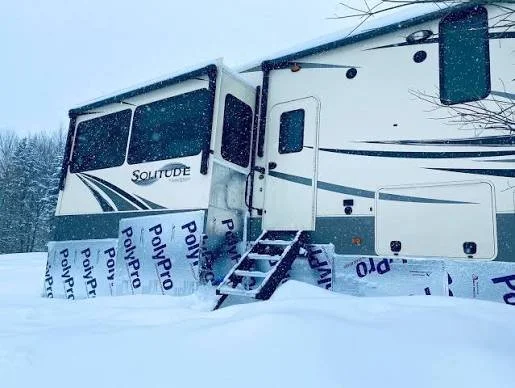
Proper RV skirting is mandatory for all winter campers. Your RV must be fully skirted and insulated using weather-appropriate materials nolater than October 20. Beginning October 21, a $20 daily fee will be applied for each day skirting is not completed.
Why This Matters
• Prevents frozen pipes and costly repairs
• Keeps your RV warmer inside
• Helps reduce your propane and electricity costs
After installation, campground staff will inspect your setup to ensure safety and effectiveness.
Recommended Materials
• 1–2″ rigid foam insulation board (e.g., pink or blue Styrofoam)
• Weatherproof or aluminum tape to seal any gaps
• Zip ties, Velcro strips, or industrial adhesive for secure attachment
• A small heat source under the RV (such as a diesel heater, space heater, heat lamp, or heated fan) is highly recommended
Important Notes
• Hay bales are strictly prohibited due to fire and pest risks
• Failure to complete proper skirting by October 20 may result in further action, including possible eviction
For visual guidance, “Cheap and Easy RV Skirt Tutorial”, on YouTube
Tarps, Inc. offers custom-fit skirting, which can be a
great long-term investment:
Address: 7329 MN-13, Savage, MN 55378
Phone: (952) 890-9390
Email: Jim@tarpsinc.com